
You’ve turned the pile, watched the steam rise on cold mornings, and waited through the awkward stages where it smelled like nothing or, worse, like something you’d rather not describe. Now comes the question every gardener eventually faces: is it actually done? For anyone using a tumbler, like the The Village Gardener approach to small-batch composting, the signs are more specific than the vague advice to “wait until it looks like dirt.” This guide walks through the exact visual, textural, and practical checks that tell you when compost is finished—and how to avoid the two most common timing mistakes.
Quick Answer
Compost is ready when it looks like dark, crumbly soil; smells earthy and sweet rather than sour or rotten; has no recognizable food scraps or original ingredients; sits at or near ambient temperature instead of staying hot; and holds moisture like a wrung-out sponge. A simple germination test—sprouting a few radish or bean seeds in a sample—confirms it won’t harm plants. Most batches finish in two to four months, though cool weather or large pieces can double that.
Key Takeaways
- Finished compost looks, smells, and feels like dark soil—not like the ingredients you added weeks ago.
- Temperature is a reliable signal: a pile that stays hot is still actively working, while a cool, stable pile is usually finished.
- The germination test is the most trustworthy check when you’re unsure, because it measures maturity rather than appearance.
- Curing for two to four weeks after the active phase reduces the risk of harming young plants.
- Compost doesn’t need to be perfect. Slightly unfinished compost can be used as mulch rather than mixed into soil.
The Five Senses Test: What Finished Compost Actually Looks Like
Before reaching for a thermometer or a seed packet, start with your senses. Finished compost has a consistent texture and appearance that’s hard to fake, and it’s the fastest way to make a first judgment.
Appearance
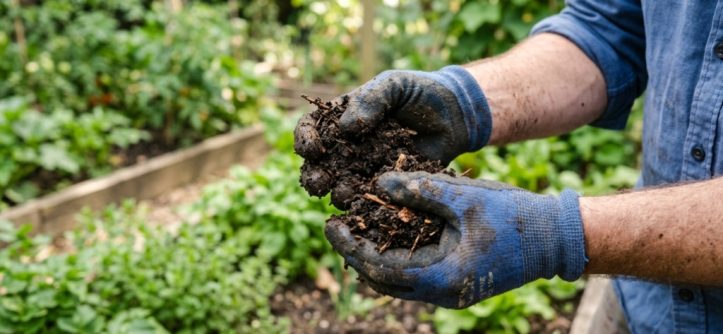
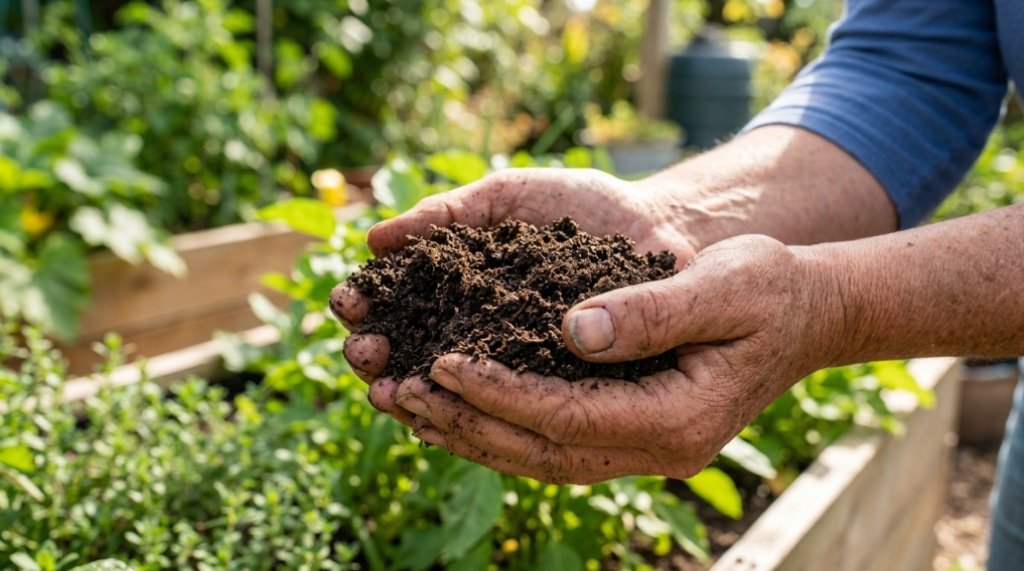
Finished compost is dark brown to nearly black, with a uniform, crumbly texture similar to potting soil. You shouldn’t be able to identify individual banana peels, eggshells, or leaves. If you can still spot whole pieces of food or intact twigs, the pile needs more time. Small, partially decomposed bits like twig fragments or eggshell chips are tolerable, but the bulk should look like soil.
Smell
Good compost smells like a forest floor—earthy, slightly sweet, and pleasant. It should not smell sour, like ammonia, or like rotten garbage. A sour smell usually means the pile went anaerobic, typically from too much moisture or not enough turning. If it smells bad, turn it, add dry brown material, and wait.
Texture and Moisture
Squeeze a handful. Finished compost should feel like a wrung-out sponge: moist but not dripping. If it’s slimy, it’s too wet. If it crumbles into dust, it’s too dry and decomposition has likely stalled. Neither state means the compost is ruined—it just needs adjustment and more time.
Temperature: The Most Reliable Single Indicator
Compost goes through distinct temperature phases, and knowing where your pile sits tells you a lot about its readiness. During the active phase, a well-managed pile heats up—often reaching 130°F to 160°F (55°C to 70°C) in the center. This heat comes from microbial activity breaking down the material.
As the readily available material runs out, the pile cools. When the center is no longer warm to the touch and the temperature matches the surrounding air, the active phase is essentially over. That doesn’t automatically mean it’s ready to use, but it does mean the pile has moved into the curing stage, which is the final stretch.
One caveat: a cool pile can also mean something stalled it—too dry, too wet, or too little nitrogen. If the pile went cool quickly and still contains recognizable material, turn it and check moisture before assuming it’s done.
Why the Germination Test Beats Every Other Check
Appearance and smell can be misleading, especially for beginners. The germination test is the most objective and practical way to confirm compost is safe for plants, because it directly measures whether the compost will support seed growth or inhibit it.
Here’s how it works:
- Fill a small pot or tray with your compost sample—no soil mixed in.
- Plant a few fast-sprouting seeds, such as radish, lettuce, or beans.
- Water lightly and keep the tray warm and consistently moist for five to seven days.
- Count how many seeds sprout and compare to a control tray planted in regular potting mix.
If germination and early growth are comparable to the control, your compost is mature and safe to use. If seeds fail to sprout or seedlings look stunted and yellow, the compost is still immature—it may contain phytotoxins or be too salty—and needs more curing time.
This test matters because immature compost can actually harm plants. It can tie up nitrogen as microbes continue breaking down organic matter in the soil, and it can release compounds that suppress seed germination. A few extra weeks of curing often fixes both problems.
Common Signs Your Compost Is Not Ready Yet
Sometimes the signs of “not ready” are clearer than the signs of “ready.” Watch for these indicators:
- Recognizable food scraps or leaves: If you can still identify what you put in, it’s not finished.
- Heat in the center: A pile that’s still warm is still actively decomposing.
- Sour, ammonia, or rotten smell: This signals anaerobic conditions or excess nitrogen.
- Seeds sprouting in the pile: If weeds or volunteer plants are growing in your compost, it hasn’t reached temperatures high enough to kill seeds—or it’s simply not mature.
- Greasy or slimy texture: Too much moisture and not enough airflow.
- A nitrogen tie-up in the garden: If plants yellow after you apply compost, it wasn’t finished.
How Long Does Composting Actually Take?
Timelines vary widely depending on method, climate, and materials. Here’s a general sense of what to expect:
| Method | Typical Time to Finish | Key Factors |
|---|---|---|
| Hot pile (turned regularly) | 4–8 weeks | Frequent turning, balanced C:N ratio, adequate moisture |
| Passive pile (turned occasionally) | 3–6 months | Particle size, weather, material balance |
| Tumbler (small batches) | 2–4 months | Batch size, aeration frequency, temperature |
| Cold climate or winter pile | 6–12 months | Ambient temperature slows microbial activity |
These are general ranges, not guarantees. A tumbler in a Michigan winter will behave very differently from one in a mild coastal climate. The important thing is to judge readiness by the compost itself, not by the calendar.
What to Do If Your Compost Is Almost Ready
If your compost passes most checks but not all—say, it looks right but smells slightly sour, or it’s cool but still has some recognizable bits—you’re in the curing phase. Curing is the final stage where the pile stabilizes and any remaining material breaks down slowly.
To cure compost properly:
- Stop adding new material to the batch.
- Keep it moist but not wet, like a wrung-out sponge.
- Turn occasionally to maintain airflow, but less frequently than during the active phase.
- Let it sit for two to four weeks, or longer if conditions are cool.
If you’re short on time and the compost is close but not perfect, you can still use it as a mulch around established plants. Immature compost is less risky on the surface than mixed into the root zone, because it won’t compete as directly with plant roots for nitrogen, If you are planning a family gardening day or need lightweight tools for your little ones, check out our guide on Kid-Friendly Garden Rakes: Making Yard Work Fun? to get the whole family involved!
Using Compost Before It’s Fully Finished: When It’s Okay
Not every situation demands perfectly finished compost. There are cases where slightly unfinished compost is fine, even beneficial:
- As a mulch: Spread it on top of soil around perennials, shrubs, or trees. It will continue breaking down slowly and feed the soil surface.
- In fall beds: Apply it in autumn and let winter finish the job. By spring, it will be incorporated and ready.
- For heavy feeders: Plants like squash, corn, or tomatoes can tolerate slightly immature compost better than delicate seedlings.
Where you should never use unfinished compost is directly around germinating seeds or young seedlings. That’s where the germination test earns its keep.
Frequently Asked Questions
Can I use compost that still has some recognizable pieces in it?
Yes, if those pieces are small and woody, like twig fragments or eggshell bits. But if you can still identify whole food scraps or large leaves, it needs more time. As a general rule, if it looks like soil with a few stray bits, it’s fine for most garden uses.
My compost smells sour. Is it ruined?
No. A sour smell usually means the pile went anaerobic from too much moisture or too little air. Turn it thoroughly, mix in dry brown material like shredded leaves or cardboard, and let it sit. The smell should fade as the pile rebalances.
How do I know if my compost is too wet or too dry?
Squeeze a handful. If water drips out, it’s too wet—add browns and turn. If it crumbles apart and feels dusty, it’s too dry—add water and turn. The target is moist like a wrung-out sponge.
Does compost need to be sterilized before use?
No. Finished compost is full of beneficial microbes that support plant health. Sterilizing it would kill those organisms. The germination test verifies maturity, not sterility, and that’s what matters for garden safety.
Can I speed up the finishing process?
Yes, to a point. Turn the pile more frequently, keep pieces small, maintain moisture, and ensure a good balance of greens and browns. But don’t rush curing—two to four weeks of stabilization after the active phase is what makes compost safe for young plants.
What if my compost never heats up?
A pile that never heats usually lacks nitrogen, moisture, or airflow. Add greens like grass clippings or kitchen scraps, water if dry, and turn to introduce oxygen. If it still doesn’t heat, it may simply be too small or too cold outside to reach thermophilic temperatures—but it will still decompose slowly.
Conclusion
Finished compost announces itself in ways that are easy to miss if you’re only watching the calendar. Look for dark, crumbly texture, an earthy smell, ambient temperature, and no recognizable ingredients. When in doubt, run the germination test—it’s the most honest answer you’ll get. If your compost isn’t quite there, give it more time to cure, or use it as mulch and let the soil finish the job. The pile will tell you when it’s ready, as long as you know what to look for.



Leave a Reply