
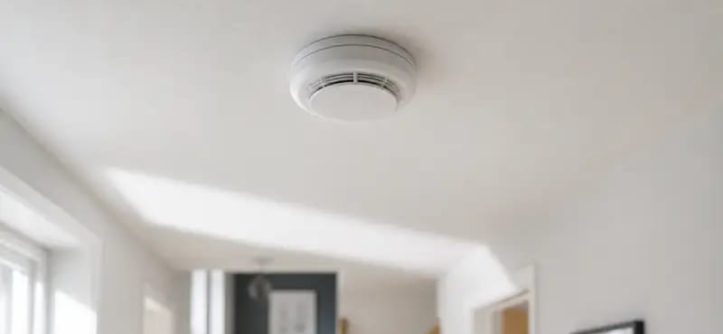
Where a fire alarm device is to be placed is often more important than the model chosen. An improperly placed fire alarm can remain silent during an emergency or trigger unnecessarily.
Keep Smoke Detectors Central and Clear
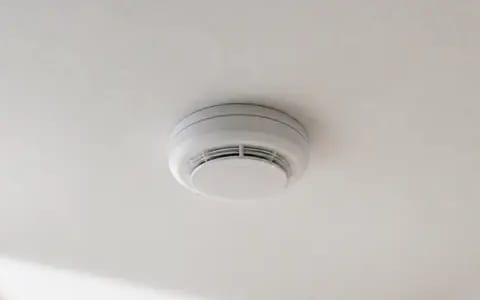
For ceiling-mounted smoke detectors, it is essential that there is sufficient air to reach the top of the detector. Hence these should be placed in the centre of the ceiling along escape routes, landings and stairs. Smoke can get caught in corners of rooms and wall junctions for some time before it starts to drift and spread. It is better to site detectors some 30cm or so away from corners rather than in them. Some of the worst sites for smoke detectors are stairwells. Detectors should be placed on every floor, not just at the bottom of the stairwell.
Use Heat Detectors in Kitchens and Plant Rooms
The majority of false alarms are caused by the detection of normal operating phenomena such as cooking, ie, toast, steam and fumes from cooking. Typical examples of such areas are kitchens, boiler rooms and plant rooms. Other areas where heat, steam or fumes may normally be present are garages and workshops containing combustion engines and also those areas where welding is carried out.
Watch for Dead Air Pockets
Long thin corridors can contain ‘dead air’ pockets which allow smoke to collect before being detected by a single detector at the end of the corridor. The apex of pitched roofs also can contain ‘dead air’ pockets of smoke against the highest point of the ceiling before spreading out to reach detectors mounted on the ceiling. In these situations additional detectors are required along the length of corridors and at the apex of roofs.
Mind the Reach at Every Call Point
The position of fire alarm call points on escape routes is also important to consider. The general mounting height for a fire alarm call point is approximately 1.4m (4’5”) above floor level. This ensures that most people will be able to reach the unit without difficulty, including some wheelchair users. However, a call point mounted behind a door that is open, or above head height for a short person, is of little use. If you want Fire Alarms Northamptonshire, ISE Fire Products is a good place to start.
Check Sounder Coverage Room by Room
Sounders are measured in dB (decibels) and the amount of sound that will travel down a corridor is not the same as the amount of sound that will get through a closed door. In certain types of premises such as HMOs, care homes and others where people sleep, every room must be able to ensure that a fire alarm sounder is heard at a minimum level at the bed. In many instances bedrooms will require their own sounder, or a sounder of a higher dB rating to be positioned near to the bedroom door rather than further down the corridor. National guidance for fire detector positioning outlines the dB levels for fire alarm sounders for detection products in various different room types. These should be referenced to ensure that a system will provide an adequate response.
Keep Detectors Away From Airflow
Air conditioning vents, extract fans and doorways all affect airflow in buildings. This can affect the performance of detectors in a number of ways. A smoke detector situated under an air conditioning vent will have the air flow past the detector and take some time to respond to a fire. Likewise a detector mounted near to a doorway could have the smoke affected by the airflow as it is leaving the room. This could delay detection or cause the detector to respond to false alarms caused by dust or moisture in the air. It is best to keep detectors away from these types of features and allow a space of at least 1m.
Choose Beam Detectors for High Ceilings
Point detectors can be very difficult to get to work in large areas like warehouses, sports halls and atriums. In these cases the smoke can take a long time to rise to ceiling height and by the time it does the fire could be fully developed. A much better approach would be to use beam detectors which send a signal across the open space and detect the presence of smoke as it crosses the detector line. In many cases a number of beam detectors would be required to give full coverage. ISE Fire Products explains the type of situations where beam detection is better than point detectors and looks at the areas where beam detectors can be used instead of point detectors.
Adjust Spacing for Ceiling Height and Shape
The effective coverage radius of a detector is reduced in higher ceiling spaces and so the spacing in taller buildings must be adjusted, as used in an office with 2.4m high ceilings is not effective in a hall with 6m high ceilings. In addition to ceiling height, the room configuration must also be taken into account and detectors need to be positioned so that they are effective along long thin areas and additional detectors can be used to cover alcoves and areas of a room created by walls and screens.
The placement of fire alarm devices is not a one off decision. Changes to a building’s contents or use can create blind spots. Regular walk rounds by personnel with a fresh perspective on the travel of smoke, heat and sound can highlight potential problems with installed systems long after initial installation.



Leave a Reply