
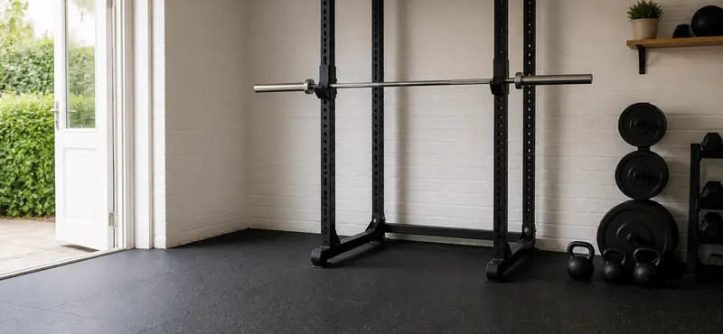
A power rack or a squat rack for your home gym? This depends on several factors including available space, your budget and what kind of workouts you intend to do in your home gym. We outline the major differences for you.
Check The Structural Difference First
In terms of structural integrity, power racks are four uprights joined together to form a cage like structure. The full cage structure of a power rack means that it is very rigid and able to support safety pins and spotter arms on the front and back of the rack. A squat rack on the other hand is typically two uprights (and possibly a back stabiliser bar) that are connected at the top. These types of racks are generally lighter and take up less space than a power rack but offer less protection for the lifter in the event of a failure.
Measure Your Floor Space Properly
A good place to start is to compare the dimensions of both types of racks. Squat stands are typically much narrower than power racks. A good example of a slim line squat stand would be around 0.6-0.7m wide, whereas a typical power rack would be around 0.9-1.1m wide. As for depth, a good quality squat stand would typically be around 0.9-1.1m deep, with some models being as shallow as 0.7m. Compare this to a typical power rack which is usually around 1.2-1.5m deep. When comparing the two to fit in your available floor space, always take into account the space required in front of the rack to allow for the bar to travel up and down.
Measure Ceiling Height Before Ordering
Measuring Ceiling Height Before Ordering. A Power Rack is very tall (typically around 2.1m-2.3m) plus the height of any pull-up bar(s) that you may also wish to add. It’s therefore vital that you measure ceiling height carefully before ordering your Gym Rack, including any beams, lighting etc. and allowing for a minimum of 15cm below the bottom of the ceiling. A Squat Stand is generally a little shorter and may be suitable for very low garages, under-stairs gyms, etc.
Compare The Safety Features
Most power racks include spotter arms and adjustable safety pins which allow you to safely lift heavy weights for bench press, shoulder press and other exercises. These are ideal for solo training as you can lift safely without having to have someone to watch for you in case you fail a rep. A good quality squat rack will have J-hooks which guide the bar and may include safety straps. However, these offer little protection should you fail a rep and the weight fall onto the ground.
Think About Attachments You’ll Actually Use
A power rack has 4 sides which form a cage like structure and typically have holes drilled in for attachments such as pull-up bars, dip bars, landmine attachments and cable pulley systems. These types of attachments can usually be bolted straight onto a power rack as the four posts give good solid points to attach to. Squat stands typically only have 2 sides and will not have the same amount of mounting points for attachments. Also, what you buy initially is usually what you are stuck with so it is worth checking out other gym racks that have been designed with future attachments in mind and have pre-drilled holes for various accessories.
A useful reference for Gym Racks is https://uk.repfitness.com/collections/gym-racks/.
Know What Each Rack Is For
The main use for a power rack is for a variety of lifts including bench press, overhead press and of course squats. This is because you can set up the safety pins in the rack to allow for a safe failure on any of the above mentioned exercises. On the other hand, a squat rack is designed primarily for squats and for racking a bar down to the ground for between sets of squats. This type of rack is not designed for pressing exercises and therefore you would be forced to bench press on the floor for example if you were to use a squat rack for your home gym.
Check Your Floor Can Take The Weight
A loaded power rack contains a huge amount of weight in a very small area and can transfer a huge amount of concentrated force to the floor. A garage with a solid concrete floor is likely to be okay but a converted loft, upstairs room or room above a cellar would require a check on the floor loading of the room before installing any type of rack. Even a small amount of movement of a loaded rack can cause huge amounts of damage and in extreme cases can even cause a ceiling below to collapse. It’s a small price to pay for peace of mind.
Weigh Up The Budget Difference
Price: A good quality squat stand can be bought for around £150-£350 or so. Power racks on the other hand typically start from around £300 and can go up to over £1,000 depending on the weight of steel used to make the rack as well as the weight capacity and whether it has any built in attachment points. It’s worth noting though that most power racks will meet the product safety standards for fitness equipment and therefore should have a weight rating and also be certified to use. These points are worth checking whether you are buying a new rack or second hand.
Either of these will be fine though and will help support your regular sessions of resistance training, recommended by international guidelines on adult physical activity, to be done in a home gym. All that needs to be done to choose between these two variants of gym racks is to correctly measure out the space that you have available and check that the floor can support the loads to be placed upon them.


Leave a Reply