
Navigating the world with a disability can present unique challenges, and accessing public restrooms shouldn’t be one of them. The Americans with Disabilities Act (ADA) was enacted to ensure that individuals with disabilities have equal access to public spaces, including restrooms. Understanding the ADA toilet requirements is essential for both businesses and individuals to create and utilize accessible restroom facilities.
Why ADA Toilet Requirements Matter
The ADA toilet requirements were put in place to ensure that people with disabilities can use public restrooms safely and independently. These requirements encompass everything from the size and layout of the restroom stall to the placement of grab bars and other fixtures. By adhering to these requirements, businesses can create inclusive spaces that welcome everyone.
Key ADA Toilet Requirements
- Clear Floor Space: There must be a minimum of 30 inches by 48 inches of clear floor space in front of the toilet to allow for wheelchair maneuverability.
Clear Floor Space in front of ADA Compliant Toilet
- Toilet Height: The toilet seat should be between 17 and 19 inches high to facilitate easy transfer from a wheelchair.
ADA Compliant Toilet Height
- Grab Bars: You must install sturdy grab bars on the side wall and rear wall beside the toilet.
Grab Bars on ADA Compliant Toilet
- Flush Controls: The flush controls should be operable with one hand and located on the open side of the toilet.
ADA Compliant Flush Controls
- Sink: The sink should be wheelchair accessible with a knee clearance of at least 27 inches high, 30 inches wide, and 19 inches deep.
ADA Compliant Sink
- Door: The restroom door should be at least 32 inches wide and have an easy-to-operate handle.
Compliant Door
- Signage: The restroom should be marked with the International Symbol of Accessibility.
International Symbol of Accessibility
Additional Considerations for ADA Toilet Accessibility
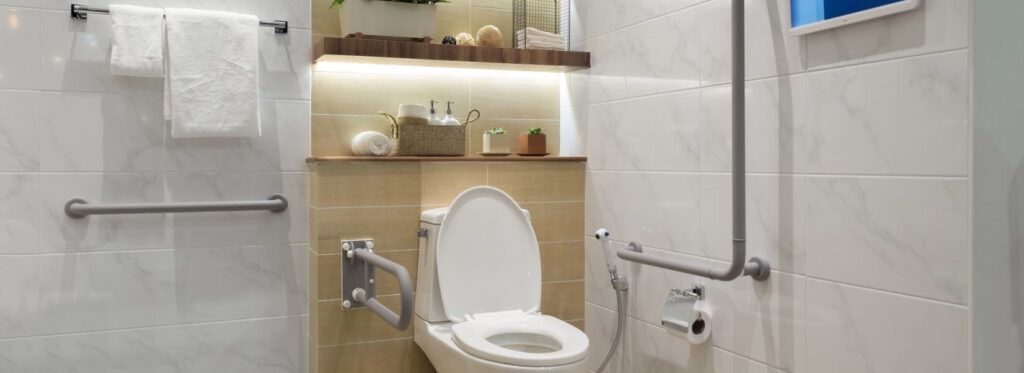
In addition to the key requirements mentioned above, there are a few additional factors to consider when designing or evaluating an ADA-compliant toilet:
- Turning Radius: The restroom should provide enough space for a wheelchair user to comfortably turn around.
- Toilet Paper Dispenser: The toilet paper dispenser should be within easy reach from a seated position.
- Mirrors: Mirrors should be installed at a height that is accessible to wheelchair users.
- Soap Dispenser: The soap dispenser should be operable with one hand and located within easy reach of the sink.
- Hand Dryer or Paper Towel Dispenser: The hand dryer or paper towel dispenser should be located within easy reach of the sink.
Benefits of ADA-Compliant Toilets
ADA-compliant toilets offer numerous benefits to individuals with disabilities, including:
- Increased Independence: Accessible restrooms allow people with disabilities to use the restroom without assistance, promoting independence and dignity.
- Improved Safety: ADA-compliant features like grab bars and clear floor space help prevent falls and injuries.
- Enhanced Comfort: Accessible restrooms provide ample space and appropriate fixtures, ensuring a comfortable experience for everyone.
- Greater Inclusion: ADA-compliant restrooms send a message that all individuals are welcome and valued.
Common Challenges and Solutions
While the ADA has made great strides in improving accessibility, there are still some challenges that individuals with disabilities may encounter when using public restrooms. Some common challenges include:
- Lack of Space: Older buildings may have smaller restrooms that are difficult to retrofit to meet ADA requirements.
- Outdated Fixtures: Older restrooms may have outdated fixtures that are not ADA-compliant.
- Inadequate Maintenance: Restrooms that are not properly maintained may have broken fixtures or obstructed clear floor space.
To address these challenges, businesses can take the following steps:
- Consult with an Accessibility Expert: An accessibility expert can help businesses identify and address any barriers to accessibility in their restrooms.
- Prioritize Regular Maintenance: Regular maintenance is essential to ensure that restrooms remain accessible.
- Provide Feedback Mechanisms: Businesses should provide a way for customers to report any accessibility issues they encounter.
Let’s Get Spooky! Your Ultimate Guide to Halloween Decorations
The Role of Technology in ADA Toilet Accessibility
Technology is playing an increasingly important role in improving ADA toilet accessibility. Some examples of innovative technologies include:
- Automatic Doors: Automatic doors can make it easier for people with disabilities to enter and exit restrooms.
- Touchless Fixtures: Touchless fixtures can help reduce the spread of germs and make it easier for people with limited hand mobility to use the restroom.
- Smart Toilets: Smart toilets with features like automatic flushing and bidet functions can enhance independence and hygiene.
Related: How Glass Windows Elevate the Aesthetics of Your Home: A Comprehensive Guide
Conclusion
ADA toilet requirements are essential for creating inclusive spaces that welcome everyone. By adhering to these requirements, businesses can ensure that people with disabilities have equal access to public restrooms. Individuals can also benefit from understanding these requirements to advocate for their needs and ensure a safe and comfortable experience when using public restrooms.
By working together to create accessible spaces, we can build a more inclusive society for everyone.



Leave a Reply