

Choosing the perfect pillow for your little one can feel overwhelming. Parents often wonder when to introduce a pillow and what size works best for their growing child. Therefore, understanding the basics of toddler pillow dimensions helps ensure your child sleeps comfortably and safely.
Many parents make the mistake of using adult pillows for their toddlers. However, these are typically too large and can pose safety risks. Additionally, the wrong pillow size may cause neck strain or discomfort. This guide will help you navigate the world of toddler pillows and make an informed decision for your child’s sleep needs.
Understanding Toddler Sleep Development
Before selecting a pillow, consider your child’s developmental stage. Most pediatricians recommend introducing pillows after your child turns two years old. Moreover, some children may not need a pillow until they transition from a crib to a toddler bed.
Young children have different proportions than adults. Their heads are larger relative to their bodies, which means they need less elevation during sleep. Consequently, the pillow you choose should provide minimal lift while still offering comfort and support.
Furthermore, toddlers move constantly during sleep. They roll, flip, and change positions throughout the night. Therefore, the pillow should accommodate this natural movement without creating safety hazards.
Standard Toddler Pillow Dimensions
When shopping for your child’s first pillow, you’ll encounter various sizes. The standard toddler pillow dimensions typically measure 13 by 18 inches. This size works well for most children between ages two and five years old.
Some manufacturers offer slightly different measurements. However, most quality toddler pillows fall within the 12 to 14-inch width and 16 to 20-inch length range. These dimensions provide adequate support without overwhelming a small child.
Additionally, thickness matters as much as length and width. Most toddler pillows measure between 2 to 3 inches in loft height. This provides gentle support without elevating the head too much. Conversely, adult pillows often measure 4 to 6 inches thick, which is excessive for young children.
Crib Pillow Size Considerations
Parents often confuse toddler pillows with crib pillows. While similar, these serve different purposes. A crib pillow size is generally smaller than a standard toddler pillow, measuring approximately 12 by 16 inches.
Nevertheless, pediatricians strongly advise against using pillows in cribs for infants under one year. The American Academy of Pediatrics recommends keeping cribs free of pillows, blankets, and stuffed animals to reduce suffocation risks.
Once your child transitions to a toddler bed, you can introduce an appropriately sized pillow. Therefore, timing is just as important as choosing the right dimensions. Watch for signs that your child is ready, such as attempting to use a blanket as a pillow or requesting one.
Factors to Consider When Choosing Pillow Size
Several factors influence which pillow size works best for your child. First, consider your child’s physical size and height. Taller toddlers may benefit from slightly longer pillows, while petite children do well with smaller options.
Next, think about the bed size. Toddler beds and twin beds require different proportions. A pillow that fits perfectly in a toddler bed might look lost on a twin mattress. However, function matters more than aesthetics when it comes to your child’s sleep quality.
Another important consideration is your child’s sleeping position. Side sleepers may need slightly thicker pillows than back sleepers. Nevertheless, avoid pillows that push the head too far forward, as this can strain the neck muscles.
Additionally, consider any special needs your child might have. Children with allergies benefit from hypoallergenic materials. Those who sweat heavily during sleep might prefer breathable, moisture-wicking fabrics.
Material Matters for Comfort and Safety
Beyond dimensions, the pillow’s material affects both comfort and safety. Natural materials like organic cotton and wool offer breathability and temperature regulation. Synthetic materials, such as polyester, often cost less but may trap heat.
Memory foam has gained popularity for toddler pillows. However, ensure it’s specifically designed for children, as adult memory foam may be too firm. Some manufacturers create shredded memory foam pillows that allow better airflow and adjustability.
Furthermore, look for certifications that guarantee safety. CertiPUR-US certification means foams are made without harmful chemicals. OEKO-TEX certification ensures fabrics are free from harmful substances. These certifications provide peace of mind for parents concerned about their child’s health.
Washability is another crucial factor. Toddlers are messy, and accidents happen frequently. Therefore, choose pillows with removable, machine-washable covers. Some pillows are entirely machine washable, which makes maintenance much easier.
Signs Your Child Needs a Different Size
Children grow quickly, and their pillow needs change accordingly. Watch for signs that indicate it’s time to size up. If your child’s head hangs off the pillow edge, the pillow is too small.
Similarly, if your child wakes with neck pain or stiffness, the pillow may not provide adequate support. However, remember that some children simply prefer sleeping without pillows, which is perfectly fine.
Moreover, observe how your child positions themselves during sleep. If they constantly bunch up the pillow or push it away, it might be the wrong size or thickness. Children naturally seek comfortable positions, so their behavior offers valuable clues.
Additionally, consider replacing pillows as your child grows. A pillow that worked perfectly at age two may become inadequate by age four. Generally, reassess pillow needs every 12 to 18 months during the early childhood years.
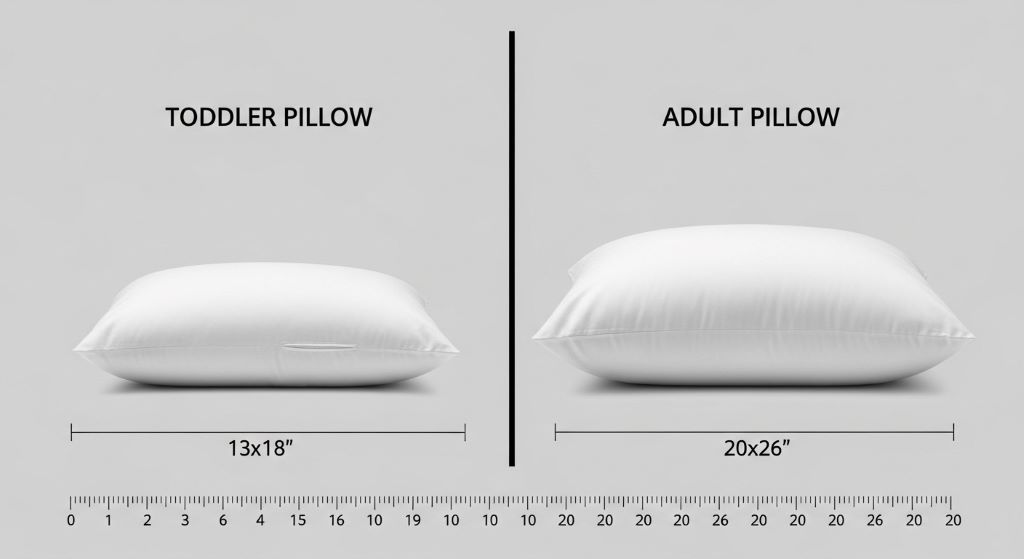
Comparing Toddler Pillows to Other Sizes
Understanding how toddler pillows compare to other sizes helps put dimensions in perspective. Standard adult pillows measure 20 by 26 inches, significantly larger than toddler options. This size difference exists for good reason.
Travel pillows for toddlers are even smaller, typically measuring 10 by 13 inches. These work well for car rides and airplane trips but usually provide insufficient support for nightly sleep.
Youth pillows bridge the gap between toddler and adult sizes. These typically measure 16 by 22 inches and work well for children aged five to ten. Therefore, as your child outgrows their toddler pillow, a youth pillow makes an excellent transition option.
Furthermore, some specialty pillows address specific concerns. Wedge pillows help with reflux or congestion. Contour pillows provide targeted neck support. However, consult your pediatrician before using specialty pillows with young children.
Safety Guidelines for Toddler Pillows
Safety should always be your top priority when selecting bedding for young children. Even with the right size, improper use can create hazards. Never introduce pillows before your child is developmentally ready.
Firm pillows work better than soft, fluffy options for toddlers. Soft pillows can create suffocation risks if a child’s face becomes buried in them. Therefore, choose pillows that provide support while maintaining some firmness.
Additionally, ensure the pillow cover fits securely without excess fabric. Loose fabric can bunch up and create breathing hazards. Zippered covers should have secure closures that children cannot easily open.
Moreover, keep the sleep environment simple. Avoid piling multiple pillows on your toddler’s bed. One appropriately sized pillow is sufficient. Extra pillows create clutter and potential safety issues during sleep.
Budget-Friendly Options Without Compromising Quality
Quality toddler pillows don’t have to break the bank. Many affordable options meet safety standards and provide adequate support. However, extremely cheap pillows may wear out quickly or contain questionable materials.
Look for sales at reputable retailers. Many stores offer seasonal discounts on children’s bedding. Additionally, online retailers often have competitive prices and customer reviews to guide your decision.
Nevertheless, consider the pillow as an investment in your child’s sleep quality. A slightly more expensive pillow that lasts longer and provides better support offers better value than frequently replacing cheap options.
Furthermore, some pillows come with warranties or satisfaction guarantees. These offers provide protection if the pillow doesn’t meet expectations. Read return policies carefully before purchasing.
When to Upgrade to a Larger Pillow
Recognizing the right time to upgrade prevents discomfort and ensures proper support. Most children are ready for youth-sized pillows between ages five and seven. However, individual growth patterns vary significantly.
Physical signs indicate readiness for a larger pillow. If your child’s shoulders extend beyond the pillow width, it’s time to upgrade. Similarly, if the head and neck aren’t adequately supported, a larger pillow may help.
Additionally, consider your child’s bed situation. Transitioning from a toddler bed to a twin bed often coincides with needing a larger pillow. The proportions should match the overall sleep space.
Moreover, listen to your child’s feedback. Older toddlers and young children can communicate preferences. If they complain about their pillow or express interest in a bigger one, take their input seriously.
Creating the Perfect Sleep Environment
The right pillow is just one component of healthy sleep habits. Combine the appropriate pillow size with other sleep essentials. Maintain a consistent bedtime routine that signals sleep time.
Keep the bedroom cool, dark, and quiet. These conditions promote better sleep regardless of pillow choice. Additionally, limit screen time before bed, as blue light interferes with natural sleep rhythms.
Furthermore, ensure the mattress provides adequate support. Even the perfect pillow cannot compensate for a worn-out or inappropriate mattress. Check that the mattress firmness suits your child’s age and size.
Moreover, establish regular sleep and wake times. Consistency helps regulate your child’s internal clock. This routine, combined with the right pillow, creates optimal conditions for restful sleep.
Common Mistakes to Avoid
Many parents make avoidable errors when selecting toddler pillows. The most common mistake is introducing pillows too early. Remember that younger toddlers often sleep better without pillows.
Another frequent error is choosing pillows based on adult preferences. What feels comfortable to you may not suit your child’s needs. Therefore, focus on age-appropriate options rather than miniature versions of adult pillows.
Additionally, some parents select pillows based solely on appearance. Cute designs and patterns are nice, but safety and support matter more. Prioritize function over aesthetics when making your decision.
Furthermore, neglecting to replace worn pillows is problematic. Toddler pillows should be replaced every one to two years, or sooner if they lose shape or develop odors. Regular replacement ensures continued support and hygiene.
Conclusion
Selecting the right toddler pillow involves balancing size, safety, and comfort. Standard dimensions of approximately 13 by 18 inches work well for most children aged two to five. However, individual needs vary based on your child’s size, sleeping position, and developmental stage.
Remember that timing matters as much as size. Wait until your child is at least two years old before introducing a pillow. Watch for developmental signs of readiness rather than rushing the transition.
Quality materials, proper thickness, and appropriate firmness contribute to a safe sleep environment. Additionally, regular assessment ensures the pillow continues to meet your growing child’s needs. By following these guidelines, you can make an informed decision that supports your child’s sleep health.
Ultimately, the perfect pillow helps your toddler sleep comfortably and safely. Therefore, take time to research options, read reviews, and choose wisely. Your investment in proper sleep support pays dividends in your child’s overall health and development.
Frequently Asked Questions
What is the ideal size for a toddler pillow?
The standard toddler pillow measures approximately 13 by 18 inches with a thickness of 2 to 3 inches. This size provides adequate support without overwhelming small children. However, some variation exists between manufacturers, with acceptable ranges being 12 to 14 inches in width and 16 to 20 inches in length.
When should I introduce a pillow to my toddler?
Most pediatricians recommend waiting until your child is at least two years old before introducing a pillow. Some children may not need a pillow until transitioning to a toddler bed around age three. Watch for signs of readiness, such as your child using blankets or stuffed animals as makeshift pillows.
How is a toddler pillow different from a regular pillow?
Toddler pillows are significantly smaller and thinner than adult pillows. While adult pillows measure approximately 20 by 26 inches with 4 to 6 inches of loft, toddler pillows are roughly half that size. This difference accounts for toddlers’ smaller body proportions and reduced need for elevation during sleep.
How often should I replace my toddler’s pillow?
Replace toddler pillows every one to two years, depending on wear and quality. Signs that replacement is needed include loss of shape, flattening, persistent odors, or visible stains that don’t wash out. Regular replacement ensures continued support and maintains hygiene standards.
Can I use a regular pillow folded in half for my toddler?
No, folding an adult pillow is not recommended for toddlers. Folded pillows create uneven support and may come unfolded during sleep, potentially creating safety hazards. Additionally, adult pillows are typically too soft and thick, even when folded. Invest in a properly sized toddler pillow instead.
Related Topics:
A Step-by-Step Guide to Washing Down and Feather Pillows
Body Pillows Why They’re Not Just for Pregnancy




Leave a Reply