
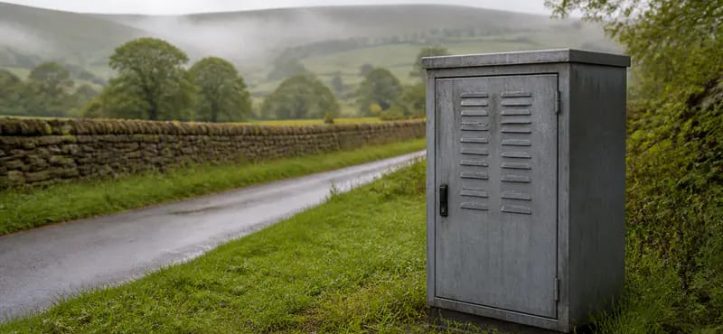
Most people associate the provision of mobile phone coverage with masts and spectrum. The cabinets on the ground are usually barely noticed, lets alone recognised as having been designed and manufactured to enable 4G coverage in rural areas. It’s worth reading Stroud News and Journal’s account of DKM Sheetmetal’s BT cabinet in full.
The key point is that as basic coverage rises, the remaining gaps are the difficult sites, and difficult sites reward enclosures designed around them. So, where is specialist metalwork required most? The hard-to-reach end of the rollout.
Mobile coverage is not just about masts
First and foremost, a signal needs a home. A cabinet sitting on a verge or in a field is exposed to the elements. The box must be able to keep the rain out, while at the same time allow for some ventilation. It must lock, and resist corrosion. And it must be a practical box, built for the site rather than for show.
What the coverage figure really measures
The Shared Rural Network progress update for September 2024 says Ofcom-measured 4G coverage from at least one operator across the UK has now reached 94.9%, up from 91% when the SRN programme started.
The single operator coverage figure does not therefore indicate that all operators are available everywhere. A person living in a rural valley may find that coverage from their own operator is patchy or non-existent.
Why the last few percent are hardest
Those remaining ‘holes’ are awkward. Most are inaccessible which means that the cabinet must be easily installed by a small team of engineers and then easily serviced by BT’s field engineers. Also, the connections for power etc. must be designed and fitted at the fabrication stage and getting this wrong means going back to the site in order to put it right.
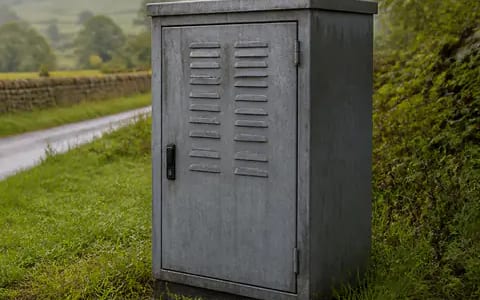
Sheet metal fabrication for outdoor enclosures such as these cabinets involves sealing, ventilation, finish etc as well as the basic cutting and bending of metal to create the shapes required. The finish to the cabinet, such as the colour of the powder coating, along with the choice of materials used will determine the appearance of the finished cabinet and how well it will withstand the elements over long periods of time.
What the cabinet detail tells us about DKM
DKM’s managing director Steve Hearn sees how people perceive fabrication to be dark and dirty. But this company is designed-led and its telecoms work in particular could satisfy the image of the company that they want to project to potential clients. In the case of work with BT for rural 4G coverage designing the equipment for them would be a better way to project that image than with paint.
It’s work like this that is going to support clients with turnover’s of millions of pounds and this is ‘design-led telecoms work’.
Rural rollout rewards design-led metalwork
This sort of job, designing to difficult sites, is where the remaining percentage of basic coverage is to be found and so rewards good design-led metalwork.
I am particularly intrigued to know what percentage of their current work is design-led telecoms work, and how much of the last few percent of coverage of remaining difficult sites are designed in this way. The next Ofcom update should show how many of those difficult sites remain for DKM’s design-led telecoms work.



Leave a Reply